


Solenoid Valve
A solenoid valve is an electromechanically operated valve. Solenoid valves differ in the characteristics of the electric current they use, the strength of the magnetic field they generate, the mechanism they use to regulate the fluid, and the type and characteristics of fluid they control.
Plugged External Leakage and Controllable Internal Leakage Provide Safer Operation
Internal and external leakage can threaten the safety of your fluid or gas processing lines and the medium that flows through them. Other self-regulating valves often have stem valves that extend away from the equipment, making a potential point of damage. But solenoid valves have a rotating core controlled by electric, pneumatic, or hydraulic actuators, intended to solve the external leakage problem of valve stem dynamic sealing. Only solenoid valves use electromagnetic force to affect the steel core sealing in the magnet-isolation sleeve, and there's no dynamic sealing, so it's easy to block external leakage. It's not easy to control the torque of the solenoid valve, so internal leakage is prone to happen — even the head of the valve stem can be pulled off. The solenoid valve's structural form makes it easy to control and reduce internal leakage. Solenoid valves are exceptionally safe, and they're suitable for mediums that are corrosive, toxic, and of high or low temperature.
Simple Operation with Easy Network Connectivity
The solenoid valve's simple structure is easy to install and maintain compared to other types of actuators such as sanitary regulating valves. What is more significant is that the composition of the automatic control system is much simpler and more cost-effective. As electro-mechanic switch signals control the solenoid valve, it's very convenient to connect it to computers. In today's world, where computer automation is widespread, the advantages of solenoid valves are even more apparent.
Lightweight Responsiveness & Energy-Saving Performance
Solenoid valves have response times as short as several milliseconds. Even the pilot solenoid valve can reach a response time in the tens of milliseconds. Due to self-looping, they're more sensitive than other self-control valves, and the coil power consumption of a well-designed solenoid valve is very low. These energy-saving products can also be configured so that only one needs to trigger an action, and the valve positions are automatically kept. Plus, solenoid valves are small and lightweight, making them easy to install and maintain.
Limited Regulation Accuracy & Applicable Mediums
Usually, solenoid valves only have two states — “open” and “closed.” The valve core can only be in two extreme positions, and continuous regulation is impossible. Therefore, the regulation accuracy is very restricted. Solenoid valves have a high requirement for the cleanliness of the medium. Mediums containing particles, viscous mediums, and mediums that are high in suspended solids are not compatible with solenoid valves.
Versatile Performance & Wide Application Range
Although solenoid valves have some inherent disadvantages, its advantages are still very prominent. Solenoid valves are designed into a variety of products to meet various needs. They have a wide range of uses in applications like medical, dentistry, industrial, automotive, and more. The technological progress of solenoid valves centers around how to overcome inherent disadvantages and how to utilize its advantages better.


Why Choose us
Excellent team
Our factory has professional technicians team and excellent sales team, which can help us to provide our clients good quality and perfect service.
Quality Assurance
ISO 9000 certificate of conformity of quality management system certification; certificate of utility model patent; SGS gold plus supplier assessment certificate.
Reputation
A company with a positive reputation is more likely to attract customers. Reputation is built through consistent quality service or products, good customer relations, and reliability.
Coil
The coil is a crucial component of the solenoid, consisting of insulated copper wire wound tightly around a core tube. When an electric current is applied to the coil, it generates a magnetic field, which is essential for the solenoid's operation.
Core
The core, also known as the armature or plunger, is the moving part of the solenoid. Made from soft magnetic metal, the core can be easily magnetized and demagnetized by low magnetic fields. When the coil is energized and generates a magnetic field, the core is attracted, causing it to move and thereby opening or closing the valve.
Core Spring
The core spring is responsible for returning the core to its original position once the magnetic field is removed. The design and configuration of the core spring can vary depending on the valve’s operation. For instance, in latching solenoid valves, a spring may not be used to return the core, as these valves rely on different mechanisms for maintaining position.
Core Tube
The core tube is where the coil is wound and serves as a soft magnetic core. It enhances the magnetic flux generated by the coil, improving the efficiency of the solenoid's operation.
Fixed core
This component is installed at the closed end of the core tube and also enhances the magnetic flux. It is made from a soft magnetic metal, which helps in improving the solenoid's efficiency.
Diaphragm
The diaphragm is a flexible component that separates the solenoid assembly from the fluid, effectively containing the fluid's pressure.
Stem
The stem is a component of the valve that connects to the core or plunger. When the coil attracts the core, the stem moves in unison, thereby actuating the valve.
Disc
The disc prevents fluid flow when the valve is closed. In certain solenoid valve designs, diaphragms, bellows, or pinch mechanisms are used in place of a disc to block the flow. Depending on the application, the disc is typically constructed from materials resistant to corrosion and erosion, such as PTFE or stainless steel.
Seat
The seat is the orifice that presses against the disc to seal the valve when it is closed. Depending on the valve design, a seat may not be present. Like the disc, the seat is typically made from materials resistant to corrosion and erosion. If the seat or disc becomes damaged, the valve may leak and fail to stop the flow.
Seal
The seal, similar to the diaphragm, isolates the solenoid assembly and the external environment from the fluid. Various materials are available for seals, such as PTFE, FKM, NBR, and EPDM, depending on the application and the nature of the process fluid.
Bonnet
The valve bonnet sits at the top of the valve body. The core tube and stem extend through the bonnet and into the valve assembly.
Body
The body is the central component of the valve that houses the diaphragm, disc, seat, as well as the inlet and outlet ports.
Bleed Orifice
In indirect or semi-direct acting solenoid valves, a bleed orifice is typically installed on the diaphragm, though some designs use an equalizing hole instead. This bleed orifice allows the valve to utilize line pressure for opening or closing the valve.
Pilot Channel
In indirect acting solenoid valves, a pilot channel is incorporated into the valve body. This channel allows fluid to flow from above the diaphragm to the downstream side of the valve.
Application of Solenoid Valve
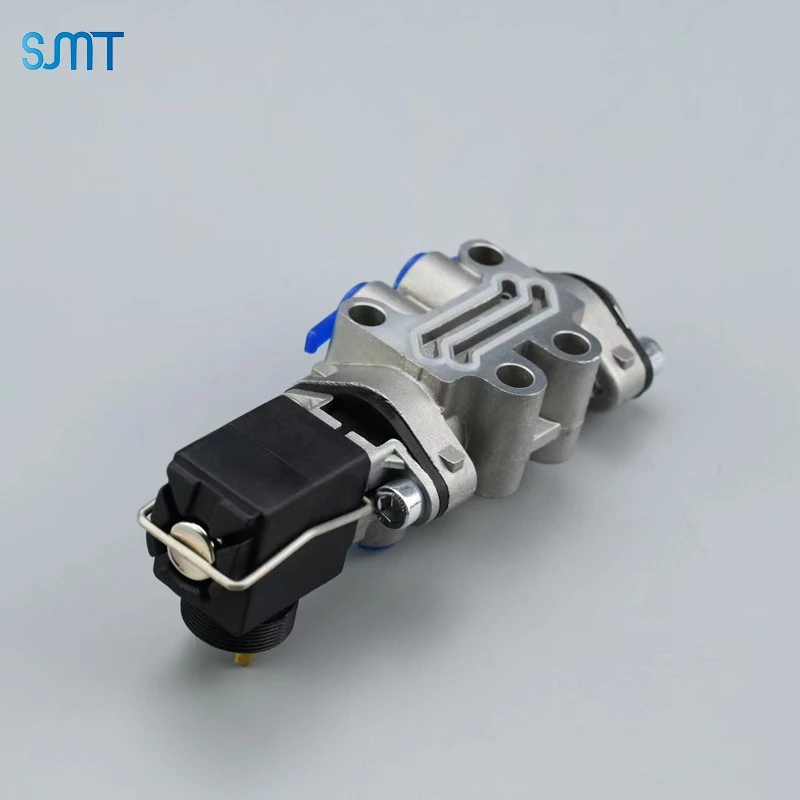
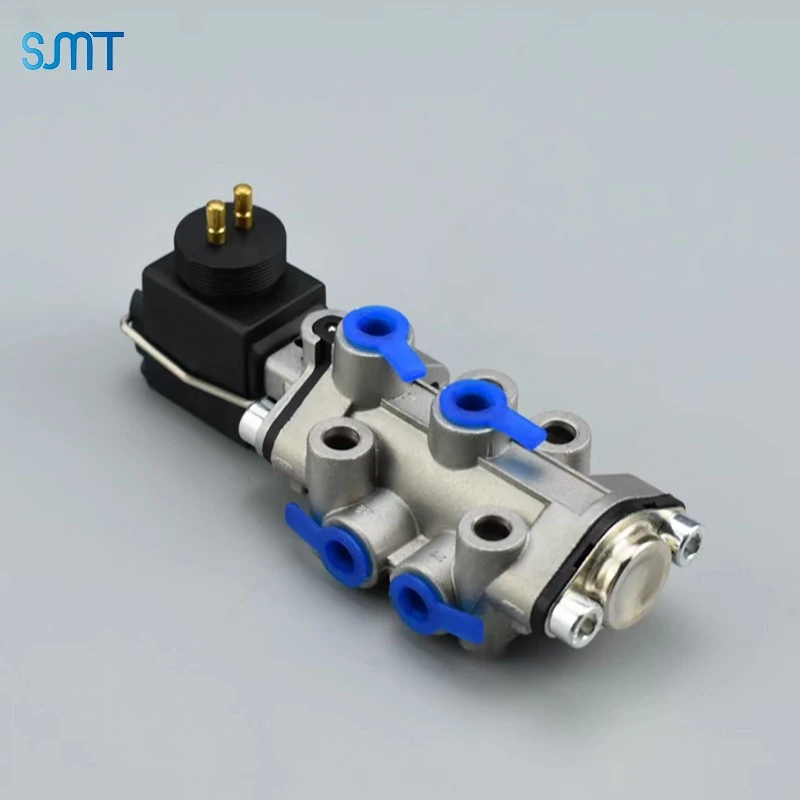

Manufacturing Systems
- Solenoid valves are used in industries to control machines, dose, mix, or restrict the flow of liquids or gases. As an example, solenoid valves are used in beverage factories to measure the exact amount of drink to be poured into bottles.
- The valves can also be used to mix different liquid substances using precise volumes. In automatic systems, solenoid valves are utilized to control the flow of fluid and produce movements.
Agriculture
- Most agricultural equipment contain solenoid valves to control a system. You will find them in irrigation devices such as the automatic sprinkler, or motorized farm machines to dose substances.
- An irrigation solenoid valve basically controls the flow of water and can be used to operate a sprinkler’s function autonomously.
- Other uses include the transmission systems of farm machinery where they’re used to regulate different fluids. You will also find these valves in equipment where they are used to dispense chemicals. Milking machines employ the action of an electromagnetic solenoid valve.
Automotive Applications
- A range of solenoid valves are used in motor vehicle systems. They are usually used to regulate the flow of automotive fluids such as oil, anti-skid brake fluid or even fuel.
- In some of these functions, a variable solenoid valve is often utilized. It allows a medium to be controlled instead of shutting it off completely.
- A good example of this is when limiting the flow of fuel to the engine to reduce vehicle speed. The fuel solenoid valve is common in countries that have regulatory rules for speed.
- Other automobile solenoid valves include the type used to shut off fuel flow and stop a vehicle, the type to drain water from a water fuel separator automatically, and the coolant control solenoid valve in a vehicle’s HVAC system.
Vacuum Systems
- Solenoid valves are widely used in vacuum applications. Direct and semi-direct valve types are the most common. They need no minimal pressure levels, which makes them best suited for these situations. A vacuum solenoid valve is usually designed to be leak-free, a necessary requirement in such conditions.
- Vacuum applications include the electronics industry where partial removal of air is needed, vacuum manufacturing and automation systems, and vacuum pumps.
Home Heating Units
- Heaters use gas or wood to heat up water and distribute it to various fixtures such as the bathroom shower head, kitchen faucet, and other installations. At the heart of the heater’s operation are solenoid valves.
- These automatically open and close to let in cold and hot water. The flow rate in the circuit is usually high, which makes a pilot operated solenoid valve the most suitable.
Refrigeration Appliances and systems
An important use of the electric solenoid valve is in refrigeration systems. A refrigeration solenoid valve serves several functions in these units. It prevents high-pressure compressor starts and protects the compressor from fluid hammer issues. The valve also shuts off and opens the passage of refrigerant as required, helping to prevent it from entering the evaporator when the compressor stops.
Car Washing Machines
- Car washing equipment delivers high-pressure water and detergent to clean motor vehicles. To mix and rise the water and cleaning solution, these pieces of equipment use a series of automatic solenoid valves.
- These valves are usually direct operated types. To protect the valves from the corrosive chemicals in the cleaning solution, manufacturers use nickel-plated brass.
Air Compressor units
- An air compressor takes in air and compresses it before taking it to the compressed air reservoir. When air enters the tank, it has to kept under pressure. This is achieved by the use of a solenoid valve.
- A compressed air solenoid valve powers up to close the flow of fluid, in this case air, and allows the built-up pressure to remain in the tank.
- The compressed air pressure should not remain in the tank for long. When the coil de-energizes, the valve opens and releases the air into the system.
How to Choose a Solenoid Valve? Quality and Performance Are the Key Criteria
Confirm Media Compatibility - Determine if the selected solenoid valve works for the desired medium, such as water, air, oil, etc. Different media have different temperature ranges, chemical properties and viscosity. For example, oil or highly viscous liquids may be more viscous than water, and therefore the valve viscous liquids as medium needs to have sufficient capacity to ensure smooth and proper flow.
Confirm the Control Mode - Solenoid valves have different operating principles (such as direct-acting and pilot-operating) and trigger mechanisms (such as power-on opening and power-off closing valves). When selecting a valve, we need to determine whether the control mode of the selected valve meets the application system's requirement to ensure the system's normal operation.
Whether There Are Special Functional Requirements - Some applications may require solenoid valves with special functions or characteristics. For example, some applications may require special functions or characteristics, such as explosion-proof function, high corrosion resistance, and low power consumption. We must select the most suitable product for the specific application needs. If there are special requirements in your application environment, it is recommended to communicate with the supplier and confirm whether the chosen solenoid valve has the corresponding special function.
The solenoid valve consists of two main components: the solenoid valve and the valve body (G). Figure 2 shows these components. There is a solenoid around the movable core located in the center, also called the plunger (E). It is an electric coil (A). It also consists of an armature (B), a light-shielding ring (C), a spring (D) and a seal (F). When stationary, it can be normally open (NO) or normally closed (NC).
In the power-off state, the normally open valve is opened and the normally closed valve is closed. When current flows through the solenoid, the coil is energized and generates a magnetic field. This creates a magnetic attraction with the plunger, moving it and overcoming the force of the spring (D). If the valve is normally closed, the plunger will be lifted so that the seal (F) will open the orifice and allow the medium to flow through the valve. If the valve is normally open, the plunger moves down so that the seal (F) blocks the orifice and prevents the medium from flowing through the valve. The shading ring (C) prevents vibration and humming of the AC coil.
The solenoid valve's main function is to control the flow of liquid or gas in a forward, fully closed, or fully open mode. They're typically utilized to replace manual valves or to regulate them remotely. A solenoid valve's role is to open or close an aperture in the valve body, allowing or preventing flow through the valve. By activating the coil, the plunger raises or lowers the orifice within the sleeve, opening or closing the orifice.
The coil, plunger, and sleeve assembly make up the solenoid valve, The plunger return spring in a normally closed valve holds the plunger on the opening and prevents flow. When the solenoid coil is energized, the resulting magnetic field elevates the plunger, allowing flow to occur. When the normally open valve's solenoid is energized, the plunger seals the aperture, blocking the flow.
Company Introduction
Zhuji Juntai Auto Spare Parts Co.,Ltd. was established in 2011 and located in Zhuji City, Zhejiang Province, China. Our factory has professional technicians team and excellent sales team, which can help us to provide our clients good quality and perfect service.
Our two main products are: Brake valves such as clutch servos, air dryer, levelling valves and some other valves; Lubrication system parts like grease gun, fittings and valve.

Our Certificates


